
Licensing law follows where the client is during each session, so a vacation or semester away puts the client in another state's jurisdiction. New York allows no exception. Maryland's new 6-month allowance is for relocation, not trips. California allows existing clients up to 30 consecutive days a year, with board notice.
The vacation problem comes up every summer and every December. A client is spending two weeks at a beach house in another state, or a client's teenager is home from an out-of-state college, or your college-age client is heading back to campus. They want to keep their sessions. You want to keep them, too. The licensing answer depends on the state where they will be sitting.
The rule does not bend for short trips
Licensing law follows the client's physical location at the time of the session. A client who is in another state for one week is, for that week, a client in that state. There is no general federal or national exception for travel. Unless the state they are visiting has its own exception, a session there needs that state's license.
States that say no
New York
New York's State Education Department is direct: licensure in another jurisdiction "does not authorize you to practice in New York whether services are provided in-person, by telephone, over the Internet, or any other format." We know of no vacation or student exception for social work. A client spending August in the Hamptons is a New York client in August.
Maryland, mostly
Maryland's Board of Social Work Examiners has long told out-of-state social workers that serving a client located in Maryland requires a Maryland license, including, in its teletherapy FAQ, a college student home for the summer, and that the board has no temporary licenses.
A law that took effect October 1, 2026 opens one door. It allows telehealth by an out-of-state social worker for continuity of care for up to 6 months after a client relocates to Maryland, or returns after "a continuous and nonincidental period of relocation outside the State." That language is built for moves. A vacation is not a relocation. A Maryland student coming home after a year of living at an out-of-state college is a closer case; ask the board in writing before relying on it.
States that allow some short-term care
California: 30 days a year
California's temporary practice allowance covers a clinical social worker licensed at the highest independent clinical level in another state who is seeing an existing client located in California. It lasts no more than 30 consecutive days in any calendar year, and you must provide the board with specified information before the first session and tell the client about the time limit and that you are not licensed in California. It works well for a summer visit; it does not cover a full semester.
Others
Some states have exceptions for practitioners generally, for a patient who is temporarily in the state. Washington's telehealth law, for example, allows follow-up to maintain continuity of care with an established patient "temporarily located" in Washington. Idaho's virtual care law allows care to a patient temporarily in Idaho for business, work, education or vacation. Read each text to see whether it reaches social workers and what conditions it sets. Our sister site's table of temporary practice rules, compared across professions, is a useful map.
College students
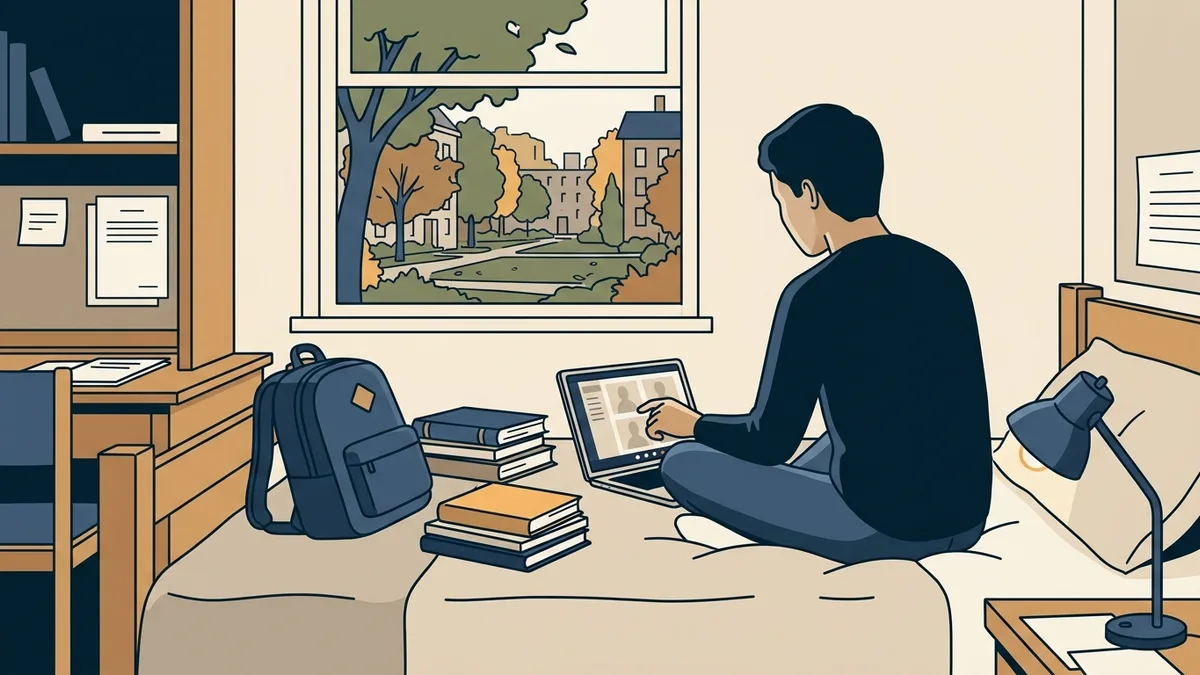
Students are the hardest group, because they move twice a year and often keep the same clinician through it. Think in terms of where the student will actually be for each block of sessions:
- The academic year. Most students are physically in the college's state for months. That is not a short trip. Either hold a license there, or refer the student to campus counseling or a local clinician for the term.
- Breaks and summer. The student is back in the home state. If you are licensed there, sessions resume normally.
- Study abroad. Another country's rules apply, and many have none that address foreign telehealth. Your malpractice insurer's view matters here.
Parents often ask whether they can sign up for sessions in the home state on behalf of a student at college. The parent's location does not change where the student is.
What to say at intake
The fix is mostly expectation-setting. Put a short paragraph in your informed consent and say it out loud at the first session:
- "I can meet with you only when you are in a state where I am licensed or where the law allows it. Right now that is [states]."
- "Please tell me before any trip, and before the start and end of each school term."
- "If you are somewhere I cannot see you, we will plan around it: sessions before you leave, a check-in when you return, and a crisis plan for while you are away."
And ask where the client is at the start of every session. A client who forgets to mention a trip does not change your exposure.
When a license is the better answer
If a client spends every winter in Florida or every summer in Maine, a short-term exception is not the right tool. Florida, for one, lets out-of-state clinical social workers register for telehealth without a full license. Maine is a compact member, which will help once multistate licenses issue. For the states you need now, we prepare endorsement applications ($499 per state). See also telehealth across state lines and when a client moves, or tell us your clients' states.
Common questions
- Can I do a session with my client while they are on vacation in another state?
- Only if you are licensed there or that state has an exception. New York has none for social work; California allows up to 30 consecutive days a year for existing clients of out-of-state clinical social workers.
- Can I keep seeing a college student who goes to school in another state?
- For sessions during the academic year, you generally need a license in the college's state. During breaks at home, your home-state license covers them.
- Does Maryland's 2026 law cover clients visiting Maryland?
- It is written for clients who relocate to Maryland or return after a continuous, nonincidental period living elsewhere. A vacation is not a relocation.
Need Help with Your Application?
We handle the social work licensing process end-to-end — eligibility screening, documents, board follow-ups, and tracking.