
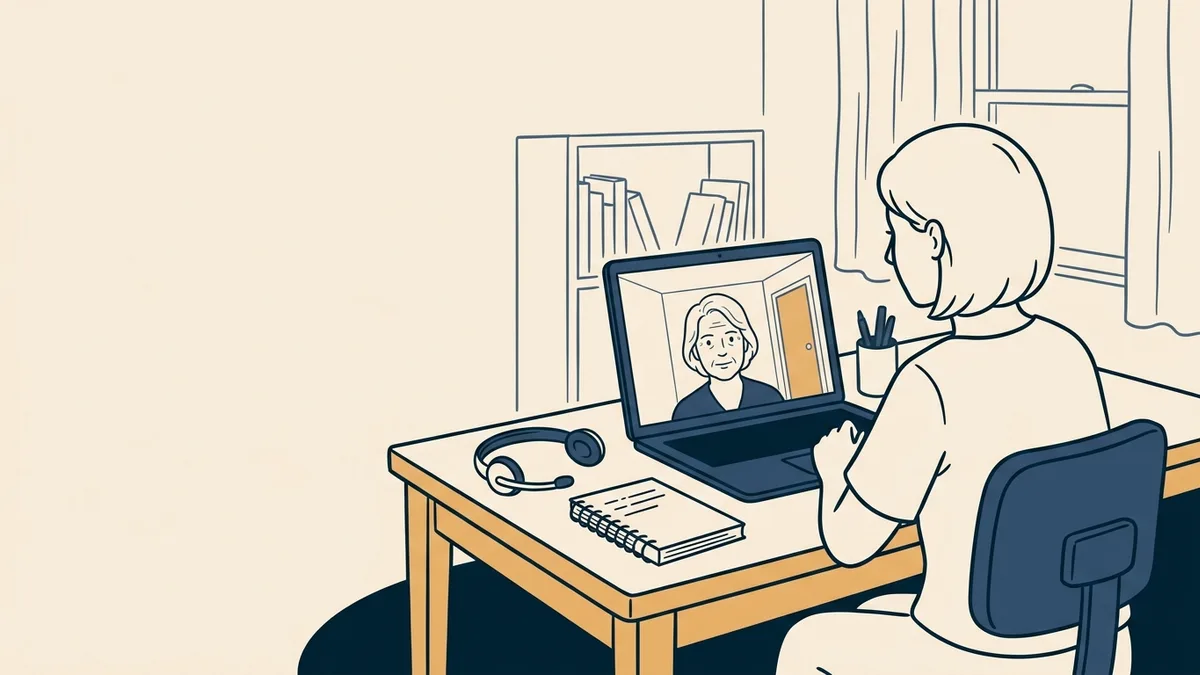
Many boards count live video supervision toward the LCSW, including Texas, Maryland, Michigan, Ohio and California. Others limit it: New York requires 100 hours of in-person supervision, Florida at least 50 percent in person, Pennsylvania an in-person individual hour per 40 worked, and North Carolina caps technology-based supervision at 50 hours without approval.
Video supervision went from an exception to routine in a few years, and many boards rewrote their rules to match. Not all of them did, and the ones that did attached conditions. A year of weekly video sessions can be fully credited in one state and largely discounted in the next, so the rule that matters is the one in the state where you will apply.
Which boards count video supervision?
As of October 2026, from the rules we read:
- Texas allows supervision sessions in person "or via audio, web technology or other electronic supervision techniques" that comply with HIPAA and Texas confidentiality law (22 TAC 781.404). Audio counts too.
- Maryland defines face-to-face supervision to include "secure video conferencing" and to exclude telephone supervision, written internet communication and any technology that is not visual (COMAR 10.42.08.02).
- Michigan lets the required individual supervision happen in person or "using a telecommunications method that provides for live and simultaneous contact" (Mich. Admin. Code R 338.2949).
- Ohio requires an initial face-to-face meeting; after that, training supervision may be in person, by videoconference or by phone (Ohio Admin. Code 4757-23-01).
- Delaware accepts live video for its one-to-one supervision, but not phone or email.
- Minnesota allows supervision by electronic media with visual contact; all of the individual supervision hours may be remote, and the remaining hours may be by phone or video but not email (Minn. Stat. 148E.106).
- Louisiana allows telesupervision that is real-time, synchronous, audio and visual, with both parties licensed in Louisiana and the supervisee practicing there; the rule requires a one-time 1.5 hours of continuing education in telesupervision and written client consent (LAC 46:XXV.509).
- California treats two-way, real-time videoconferencing between supervisor and supervisee as face-to-face supervision (Bus. & Prof. Code 4996.23.1).
Which boards cap it or require in-person time?
- New York requires the supervisor to provide "at least 100 hours of in-person individual or group clinical supervision." Video sessions may help you practice well; they do not count toward that 100.
- Pennsylvania requires at least two hours of supervision for every 40 hours of clinical experience, at least one of them "individually and in person," and the other, if in a group, also in person (49 Pa. Code 47.12c).
- Florida lets supervisors and registered interns use face-to-face electronic methods, but they must meet in person for at least 50 percent of the required supervision, and they must have at least one in-person meeting before any online supervision starts (Fla. Admin. Code 64B4-2.002, as amended July 2026).
- North Carolina counts no more than 50 hours of supervision through technology toward the LCSW unless the board approves more in advance, and that supervision must be synchronous, with audio and video for the entire session, and confidential (21 NCAC 63 .0211).
- Oregon allows videoconferencing, but the first and final supervision sessions and at least one session per quarter must be in person (Or. Admin. R. 877-020-0010).
- Virginia requires face-to-face supervision and says the board "may consider alternatives to face-to-face supervision" if the applicant shows an undue burden from hardship, disability or geography (18VAC140-20-50). Ask before you assume video counts.
What conditions do boards attach?
The same few, in different combinations:
- Real time. Michigan, California and North Carolina say so expressly, and Maryland and Delaware exclude written or email exchanges. Treat recorded messages, email and chat as not supervision.
- Video as well as audio. Maryland, North Carolina and Delaware exclude phone supervision. Texas and Ohio allow it.
- Confidentiality. Texas requires HIPAA-compliant technology; North Carolina requires that the session maintain the confidentiality of the communication; Florida makes supervisor and intern responsible for client confidentiality online and in person. A consumer video app with no business associate agreement is a poor choice.
- An in-person start. Ohio, Florida and Oregon all require at least one in-person meeting before remote supervision.
- Caps or ratios. North Carolina's 50 hours, Florida's 50 percent, Pennsylvania's in-person hour.
Can my supervisor be in another state?
That is a different question from the format, and it depends on the state where you practice. Ohio requires both supervisor and supervisee to be licensed in Ohio when training supervision occurs there. Arizona requires at least 50 of the 100 supervision hours to come from an LCSW licensed by its board. Virginia's rule expects the supervisor to hold a clinical license in the jurisdiction where the services are delivered, with exceptions the board may consider. A video link makes an out-of-state supervisor practical; it does not make them qualified. See moving mid-supervision.
How do I document virtual supervision?
- Record the format of every session in your log: in person, video, phone, individual or group.
- Track the running share of in-person hours where your board sets a minimum, so you are not short in month 23.
- Note the platform you used and keep any written telehealth or supervision protocol your board requires. Florida, for example, requires interns doing electronic therapy to have a written telehealth protocol and safety plan with their supervisor.
- If your state caps technology-based hours and you need more, get the board's approval before you exceed the cap, not after.
More on logs and verification forms in documenting supervision. Supervision rules in other behavioral health professions differ again; White Glove Counseling covers the cross-state version for counselors in telesupervision across state lines, a sister-site post.
When you apply, our LMSW-to-LCSW Clinical License Upgrade checks your supervision formats against your board's rule before the application goes in. See pricing.
Common questions
- Does video supervision count toward the LCSW?
- In many states, yes, if it is live and confidential. New York requires its 100 supervision hours in person, and Florida, Pennsylvania and North Carolina limit how much remote supervision counts.
- Can phone calls count as supervision?
- In Texas and Ohio, phone or audio sessions are allowed. Maryland, North Carolina and Delaware exclude telephone supervision; they want video.
- Do I need to meet my supervisor in person at all?
- In some states. Ohio and Florida require at least one in-person meeting before remote supervision, and Florida requires half of all supervision in person.
Need Help with Your Application?
We handle the social work licensing process end-to-end — eligibility screening, documents, board follow-ups, and tracking.