
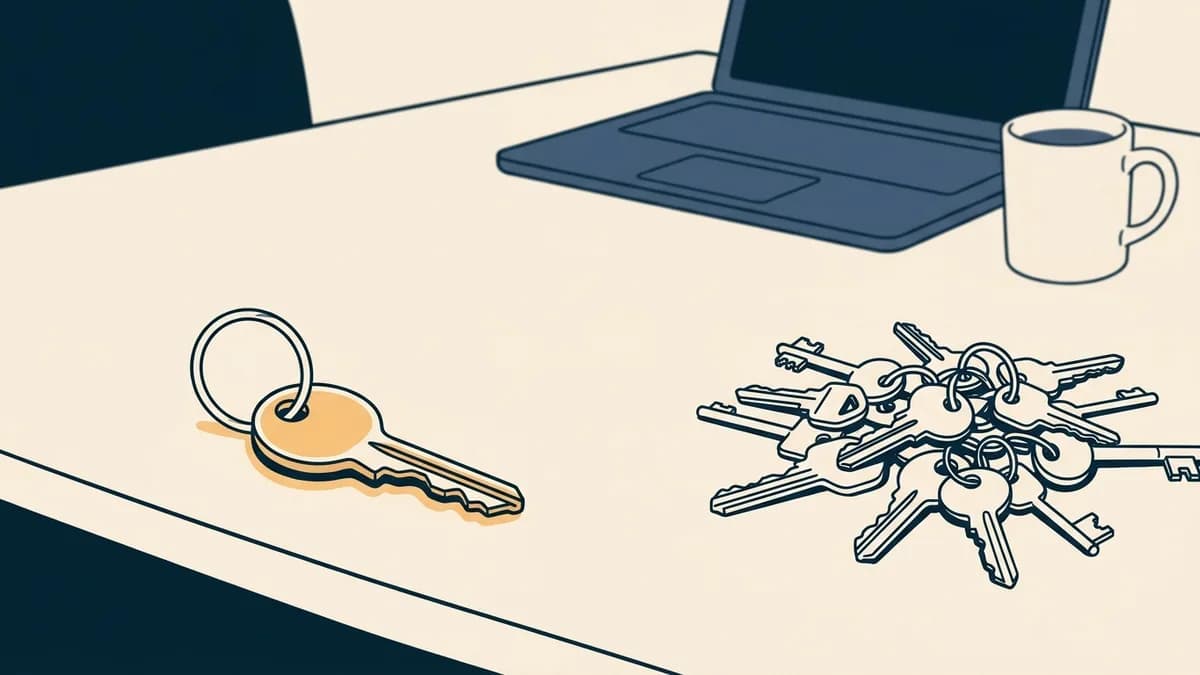
The Social Work Compact issues one multistate license from your home state that authorizes practice in every member state. Some other behavioral health compacts instead grant a separate privilege for each remote state, with a fee and renewal for each. Under both, you follow the law of the state where the client is located.
Social workers who have heard about compacts from colleagues in other professions sometimes expect the Social Work Licensure Compact to work state by state: apply for each state you want, pay each state, get a separate permission for each. It does not. The compact's model law defines a multistate license as "a license to practice as a Regulated Social Worker issued by a Home State Licensing Authority that authorizes the Regulated Social Worker to practice in all Member States." One license, every member state.
How does the multistate model work?
You hold a license in your home state, which is the member state where you primarily live. When your state goes live, you apply to your own board for a multistate license on top of it. The board checks your eligibility, runs a fingerprint-based FBI background check and designates your category: bachelor's, master's or clinical. Once issued, that license is recognized in every member state. The Commission's FAQ says that, after the license is granted, social workers "will be able to practice in all other member states of the compact without any further steps necessary."
The Commission's implementation guide calls it a layered license. Your home-state license is the anchor; the multistate license adds the authority to practice in other member states.
How is that different from a per-state privilege?
Unlike social work's model, the Counseling Compact grants a separate privilege for each remote state. A counselor applies for each state, pays a Commission fee and that state's fee for each one, and renews each one. Our sister site White Glove Counseling compares the behavioral health compacts in one place, so we will not repeat the whole table. The parts that matter for a social worker:
- What you apply for. Social work: one multistate license, from your home board. Per-state model: one application per remote state.
- What you pay. Social work: one state fee plus a $20 Commission fee per transaction, under the fee rule adopted in September 2026. States have not set their fees yet. Per-state model: fees multiply with every state.
- How many states it covers. Social work: all members at once, in your category. Per-state model: only the states you bought.
- Renewal. Social work: the multistate license renews with your home state's requirements. Per-state model: each privilege has its own renewal step.
What stays the same under both models?
Several rules are shared, and they are the ones that cause the most trouble when ignored.
- Client location governs. You follow the laws, regulations and standards of the state where the client is located at the time care is rendered.
- Home state means where you live. A license in a member state you do not live in does not make that state your home state.
- Remote states can still act. A remote state can remove your authorization to practice there, impose fines and take other protective action. If your multistate license is encumbered, your authorization is deactivated in every remote state until the encumbrance is lifted.
- CE runs through the home state. The Commission's FAQ says compact users complete continuing education for their home-state license only.
Is a multistate license a national license?
No. The Commission says so directly: the compact "does not establish a national license." It covers member states only. California, New York, Texas and the other non-members still require their own licenses. See the holdout states.
Is the authorization in a remote state a license there?
The model law calls it a "Multistate Authorization to Practice" and says it is "equivalent to a license" in that remote state. You will not get a separate license number from each remote state, though. Your identity in the system is your home-state license and the Commission's unique identifier.
What happens when you move?
Because the license is tied to your home state, a move matters. Move from one member state to another and you apply to the new state for reissuance; the Commission's rule gives you 30 days after establishing domicile. Move to a non-member state and you lose the compact route altogether. Details in Moving to a new home state with a multistate license.
Can I use it yet?
Not yet. No state was issuing multistate licenses as of October 2026. The Commission expects its data system to be finished in spring 2027, and states will come online after that. Our status snapshot has the details.
If you are dual licensed, the comparison has a practical edge: you might use a compact for one license and need separate state licenses for the other. The sister site's license comparison is a good starting point. To check how the compact will apply to you, start with our Compact Readiness Review.
Common questions
- Do I apply separately for each state under the Social Work Compact?
- No. Once your home state is issuing, you apply once to your home board. The multistate license covers every member state in your category without further applications.
- Does the Social Work Compact create a national social work license?
- No. The Commission says it does not establish a national license. It covers member states only, so non-members such as California and New York still require their own license.
- Whose law applies when I see a client in another compact state?
- The law of the state where the client is located at the time of service. That includes its scope of practice, reporting duties and record-keeping rules.
Need Help with Your Application?
We handle the social work licensing process end-to-end — eligibility screening, documents, board follow-ups, and tracking.