
Long-licensed social workers usually qualify for endorsement, but must prove the record: an ASWB score or board record of the exam, transcripts from programs that may have closed, verifications from every board, and sometimes supervision. Many endorsement routes waive experience for established licensees. Ask the new board in writing what substitutes it accepts for missing documents.
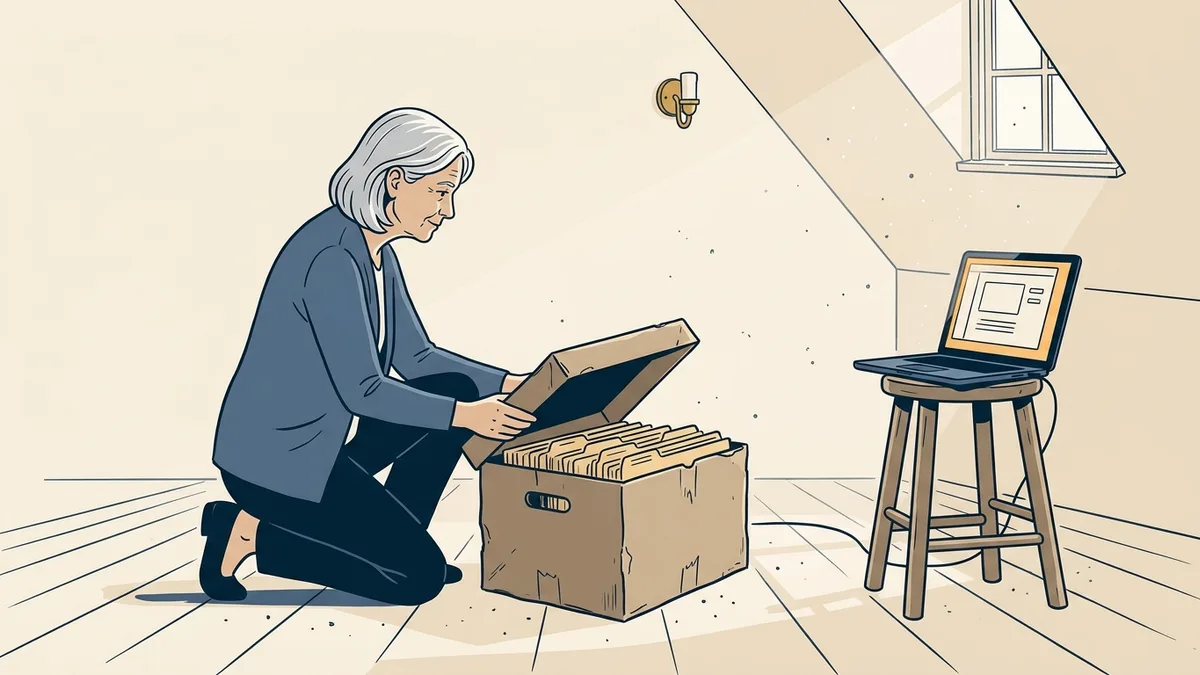
A clinician licensed in the 1990s, or earlier, usually assumes endorsement will be easy. Thirty years of clean practice should count for something, and with many boards it does: experience requirements are often waived for established licensees. The trouble is rarely the record. It is proving the parts of the record that the new board still wants to see, when the documents are scattered, faded or gone.
Which parts of an old file cause problems?
Exam records
Most boards want your national exam score sent by ASWB. If you tested long ago, under a different name, or before your state used the current ASWB exams, the record may be incomplete or harder to match. Start by asking ASWB what it holds under every name you have used. A transfer costs $40 and ASWB sends it within 7 to 10 business days once it can match the record; a name change needs legal documentation.
If ASWB has nothing, ask your original board whether its licensing file shows the exam you passed and the date. Some boards accept a board-certified statement in place of a score report. Ask the new board before assuming.
Licensed before an exam was required
Some long-time licensees never took a national exam, because their state did not require one when they were licensed or because they were grandparented in when the license was created. Endorsement rules treat this differently:
- Some boards accept long licensure in place of the exam.
- Some require the exam regardless. New York's LCSW endorsement, for example, requires that your original license was based on an MSW with clinical content, supervised post-MSW experience and the ASWB exam, along with 10 years of licensed practice in the 15 years before applying.
- The Social Work Compact has a legacy route for exactly this group: licensure in your home state at the same category before the state required the exam, with continuous licensure since. See legacy licensees and the compact.
Closed or renamed programs
Boards want an official transcript and, often, confirmation that your program was CSWE-accredited when you graduated. If the school closed, its records usually went to another institution or a state agency that holds closed-school records. Find out which, and order early; these requests are slow. If the program has changed names or merged, a note from the current registrar connecting the old name to the new one saves a round of questions.
California's credential path, for example, requires that the degree that qualified you for your clinical license is a master's in social work from a CSWE-accredited school.
Supervision that predates current forms
If the new board asks for supervised experience, it will hand you its own form, written for today's rules. Your supervisor may have retired or died, and your hours may have been logged in a way no current form contemplates. Options boards commonly consider:
- Your original board's record that your supervision was accepted at the time.
- A statement from the agency or employer where you were supervised.
- Waiver of the experience requirement on the strength of years of licensed clinical practice, which many endorsement routes provide.
Ask the new board in writing what it will accept before you spend weeks looking for a supervisor. See documenting supervision.
Verifications from boards you left long ago
A license you held for two years in 1998 may still need to be verified. Older records may be archived, under a maiden name or under a board that has since merged. Order these first. See license verification.
Title changes
Your license may carry a title the state has since retired or renamed. Texas no longer issues the LMSW-AP, for example, and New York stopped accepting applications for the LCSW "R" designation in 2023, though existing holders keep it. Send the new board your license's scope, not only its title.
One registry change to know about
If you kept your records in ASWB's Social Work Registry, ASWB says the Registry no longer accepts new applications or renewals and will cease operations in March 2027. Ask ASWB how to get your records before then.
Does the board care that your CE is current?
Yes, in one specific way: a new state will want your current license active and in good standing, which means CE completed for its last renewal. Some states also require their own mandatory topics before issuing a license or at first renewal. Long-licensed applicants sometimes discover a lapse in an old secondary license during this process; resolve it before you apply, not after.
A sensible order of work
- List every license you have held, with years and names used.
- Ask ASWB, and if needed your original board, for your exam record.
- Order transcripts and request verifications from every board, on the same day.
- Read the new board's rules on experience waivers, and only then decide whether you need supervision documentation.
- Write short explanations for every gap: a lapse, a name change, a missing record.
We rebuild files like these regularly, and the work is mostly patience and phone calls. License by Endorsement is $499 per state. If the compact matters to you later, the Compact Readiness Review ($149) checks whether your license will qualify under the legacy route. Tell us what you have.
Common questions
- What if ASWB can't find my old exam score?
- Ask ASWB to search under every name you have used. If it holds nothing, ask your original board whether its file documents the exam, and ask the new board whether it will accept that.
- My supervisor from 1995 has died. How do I verify supervision?
- Many endorsement routes waive supervised experience for long-licensed clinicians. If not, ask the board whether it accepts your original board's record or an employer statement.
- My social work school closed. How do I get a transcript?
- Closed schools' records usually pass to another institution or a state agency. Identify the custodian and order early; these requests can take weeks.
Need Help with Your Application?
We handle the social work licensing process end-to-end — eligibility screening, documents, board follow-ups, and tracking.